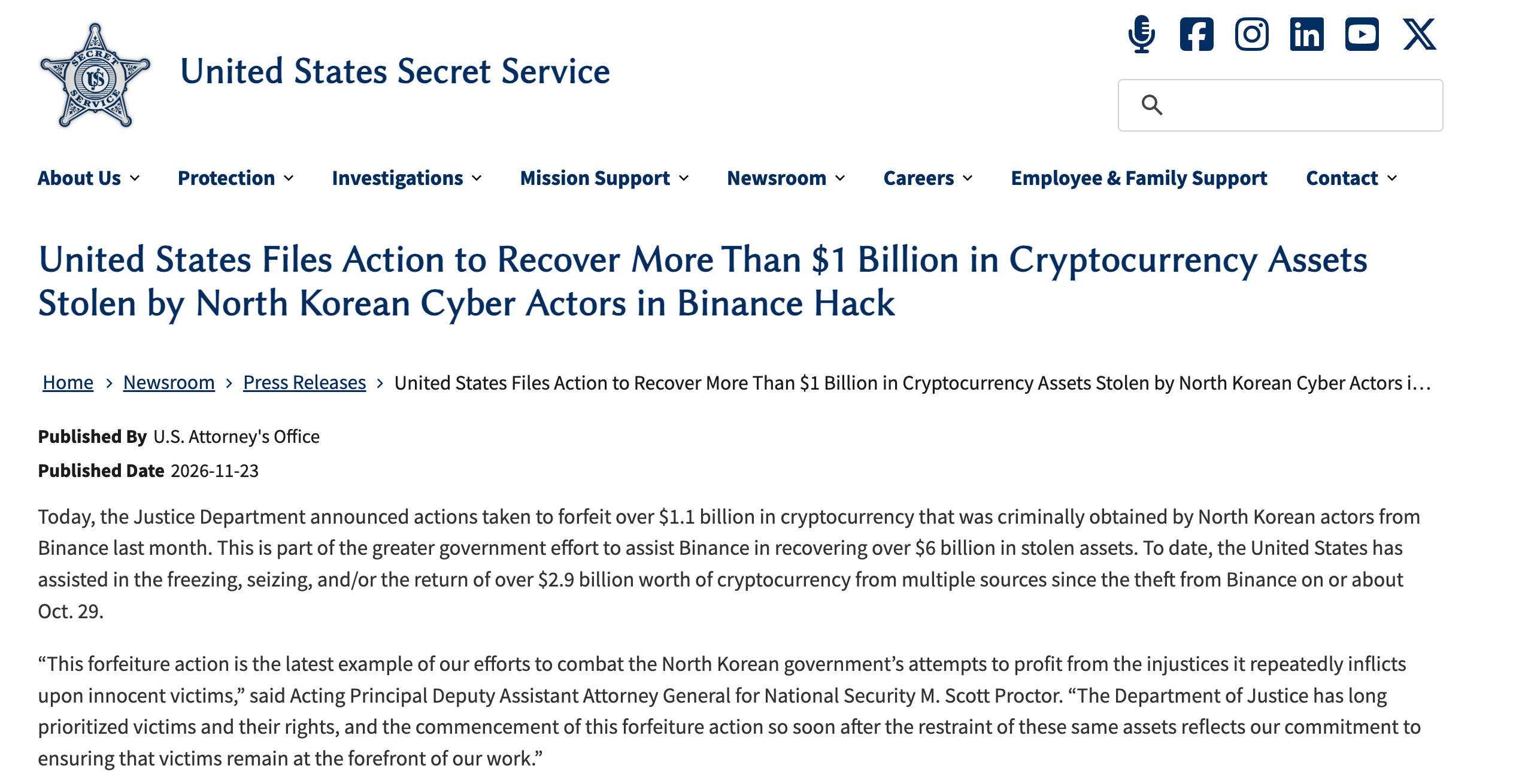
The US Department of Justice and Secret Service announced on November 23, 2026, that they had filed a civil forfeiture complaint in federal court in the District of Columbia seeking more than $1.1 billion in USDC linked to a reported theft from Binance by North Korean hackers. The filing seeks a court order; it does not mean the government has won the assets or decided who will ultimately receive them.
In its November 24 report, TechFlow said hackers had taken more than $6 billion in crypto assets in an attack around October 29. According to the report, US authorities and their partners had blocked more than $2.9 billion by November 23, including the USDC at issue in the complaint. TechFlow said more than $3 billion remained in circulation across blockchain addresses.
Why forfeiture matters for frozen USDC
TechFlow reported that the more than $1.1 billion in USDC had been frozen in early November under a court restriction sought by the US government, with technical assistance from issuer Circle. A freeze prevents movement of the tokens but does not itself transfer them to a victim. The civil forfeiture case is the government’s attempt to obtain legal control of the assets.
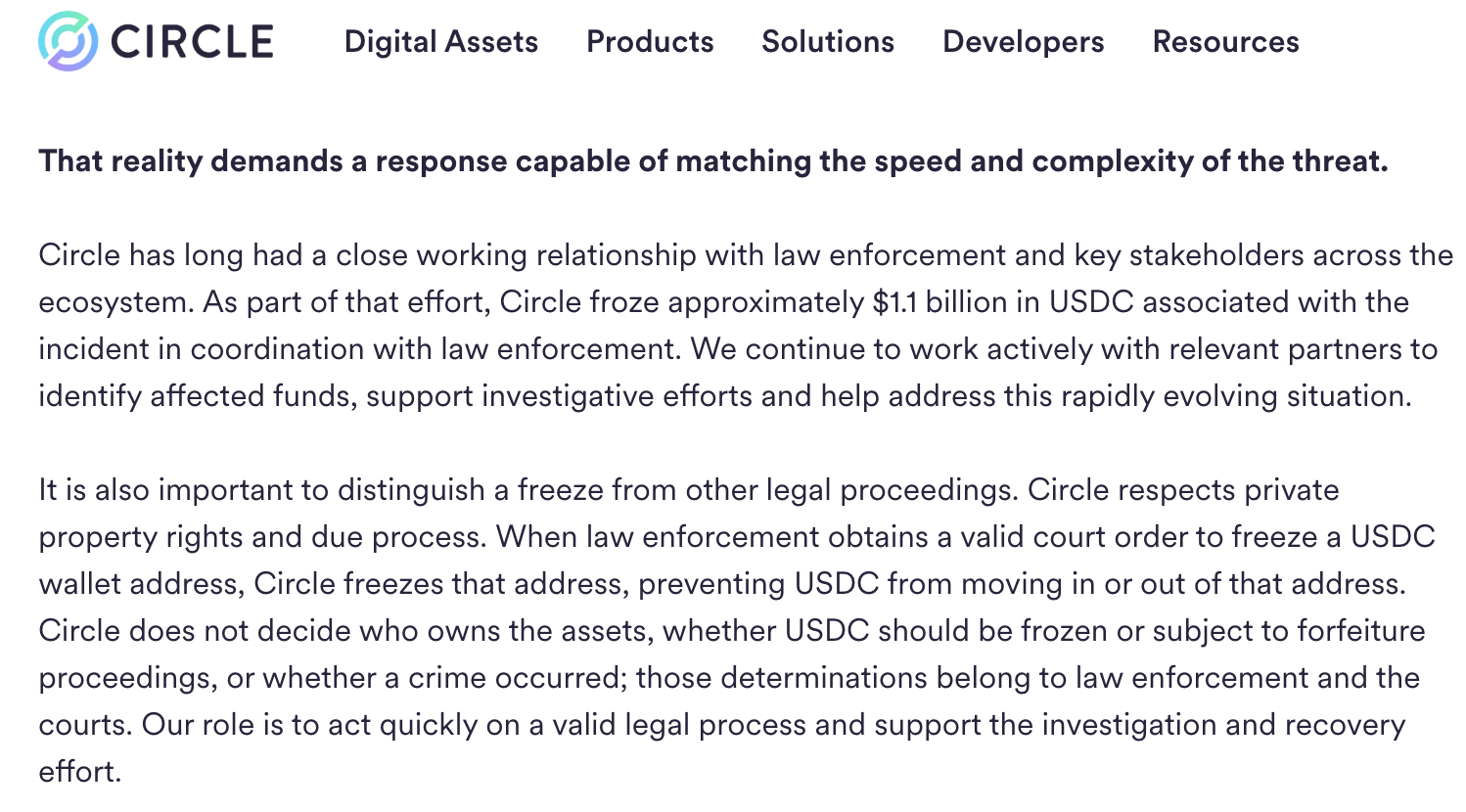
TechFlow described a possible subsequent process in which Circle would destroy the frozen USDC and issue an equivalent amount to an address designated by the government. That step remains conditional on a court ruling; it has not occurred merely because the complaint was filed.
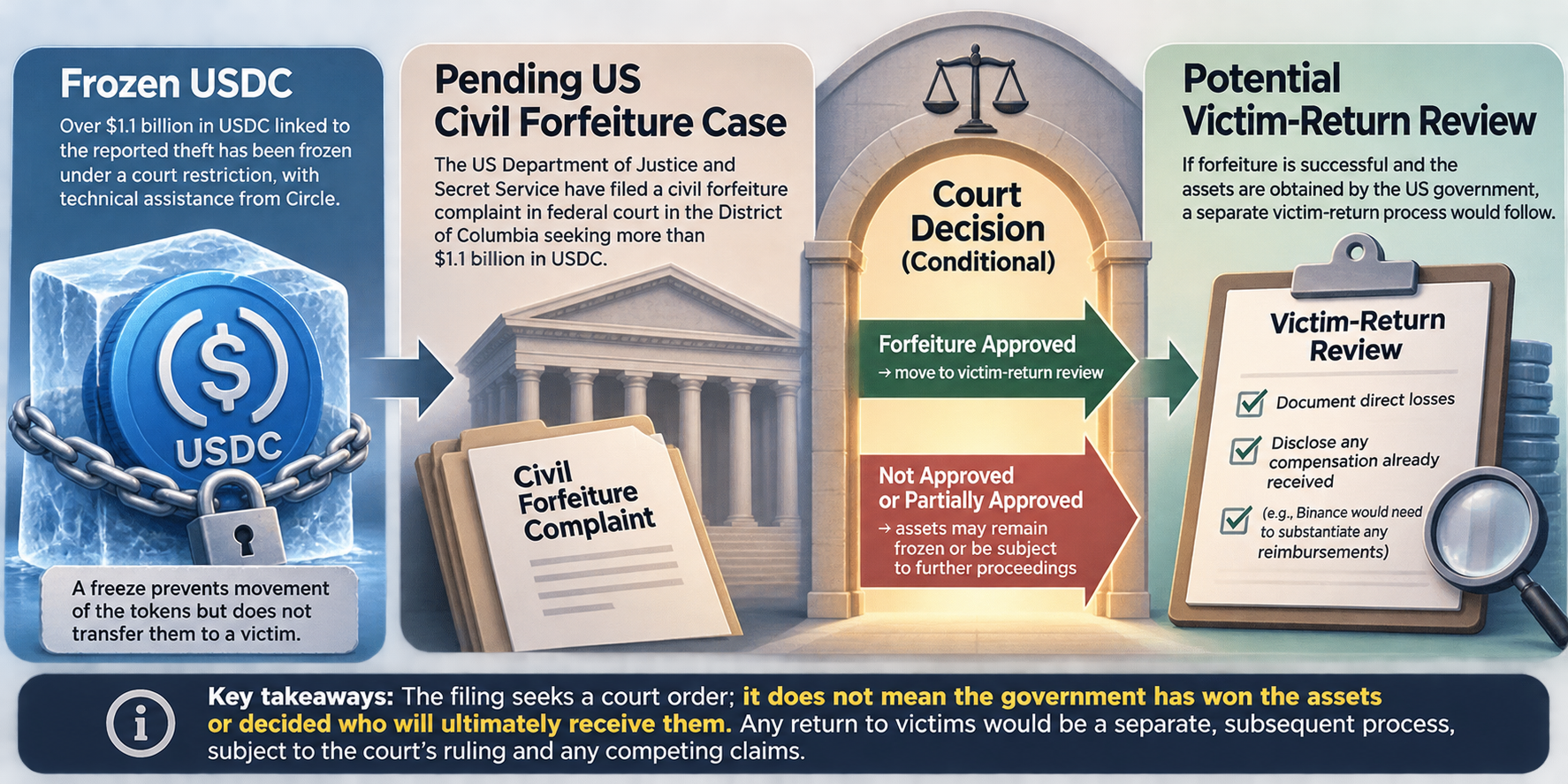
Return to victims would be a separate step
A successful forfeiture would not automatically return the funds to Binance. TechFlow said a subsequent victim-return process would require claimants to document direct losses and any compensation already received. If Binance had reimbursed affected users with its own funds, it would need to substantiate those payments to support its own claim. The report did not establish that Binance had made such reimbursements or that any claimant would recover the full amount.
TechFlow cited Justice Department official M. Scott Proctor as saying prosecutors moved quickly after the freeze to prioritize victims’ interests. The outcome remains subject to the court case and any competing claims. TechFlow also reported that more than $1.7 billion of the assets blocked by authorities lay outside this USDC complaint, across other stablecoins and jurisdictions.