
Original report published Nov. 7, 2026, at 02:47 UTC+8.
The Bank of Russia has finalized rules under which exchanges can offer Bitcoin (BTC), Ether (ETH) and Tether USDt (USDT) to retail investors starting Nov. 17, 2026. The rules distinguish between qualified and non-qualified investors: non-qualified investors may purchase up to 300,000 rubles (about $3,700) in cryptocurrency annually through each intermediary, including brokers, asset managers and crypto exchange providers. Qualified investors have no purchase limit, but all investors must pass a mandatory test before trading.
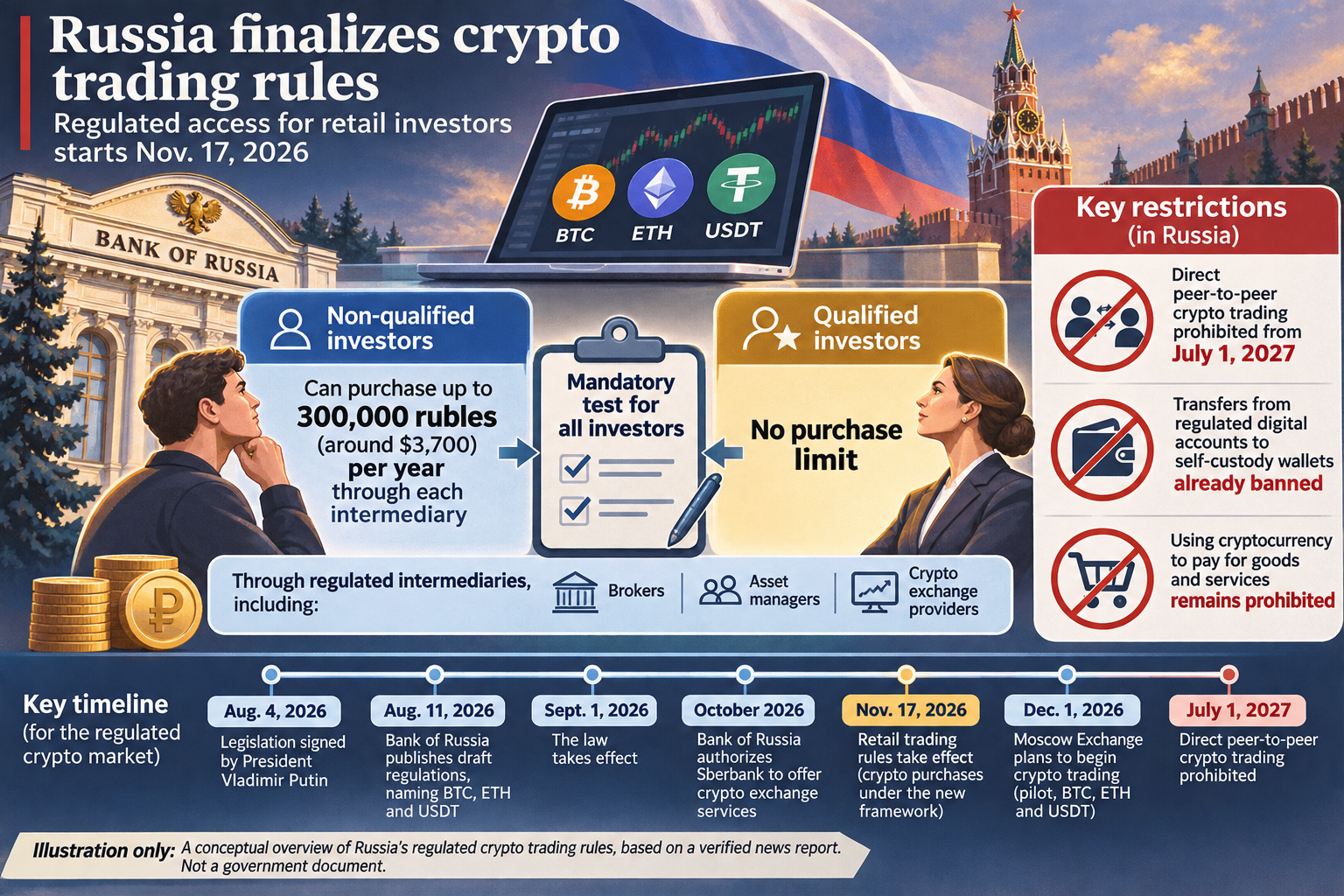
The framework follows legislation signed by President Vladimir Putin on Aug. 4, 2026, establishing a regulated cryptocurrency market under central bank oversight. The Bank of Russia published draft regulations on Aug. 11, naming BTC, ETH and USDT as eligible for public trading based on market capitalization, average daily trading volume and at least five years of price history on foreign exchanges. The law took effect Sept. 1. The central bank subsequently authorized Sberbank to offer crypto exchange services in October.
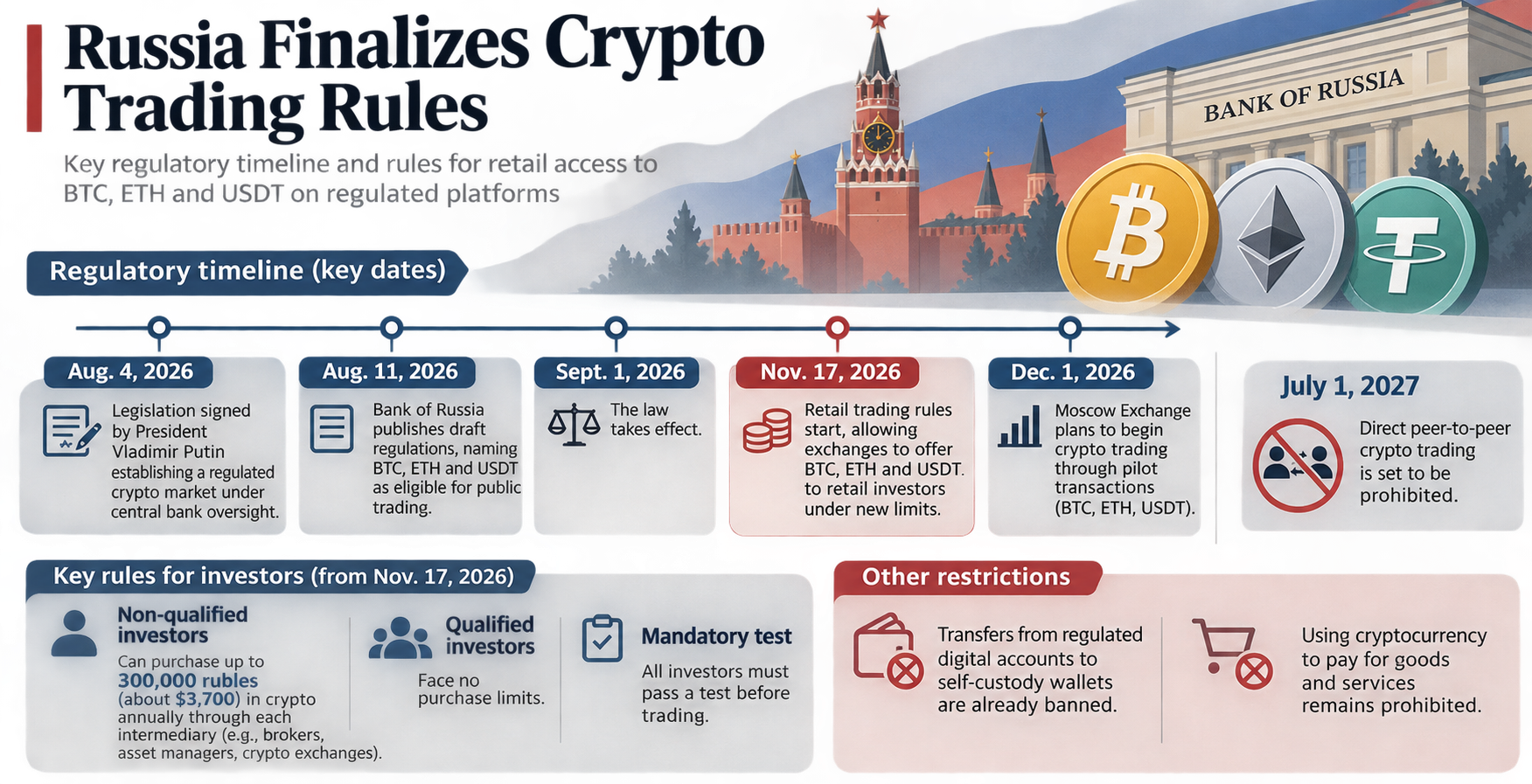
Moscow Exchange was preparing to begin cryptocurrency trading on Dec. 1, 2026, initially offering the three assets through pilot transactions, according to the original report. That planned launch was separate from the Nov. 17 start of the retail trading rules.
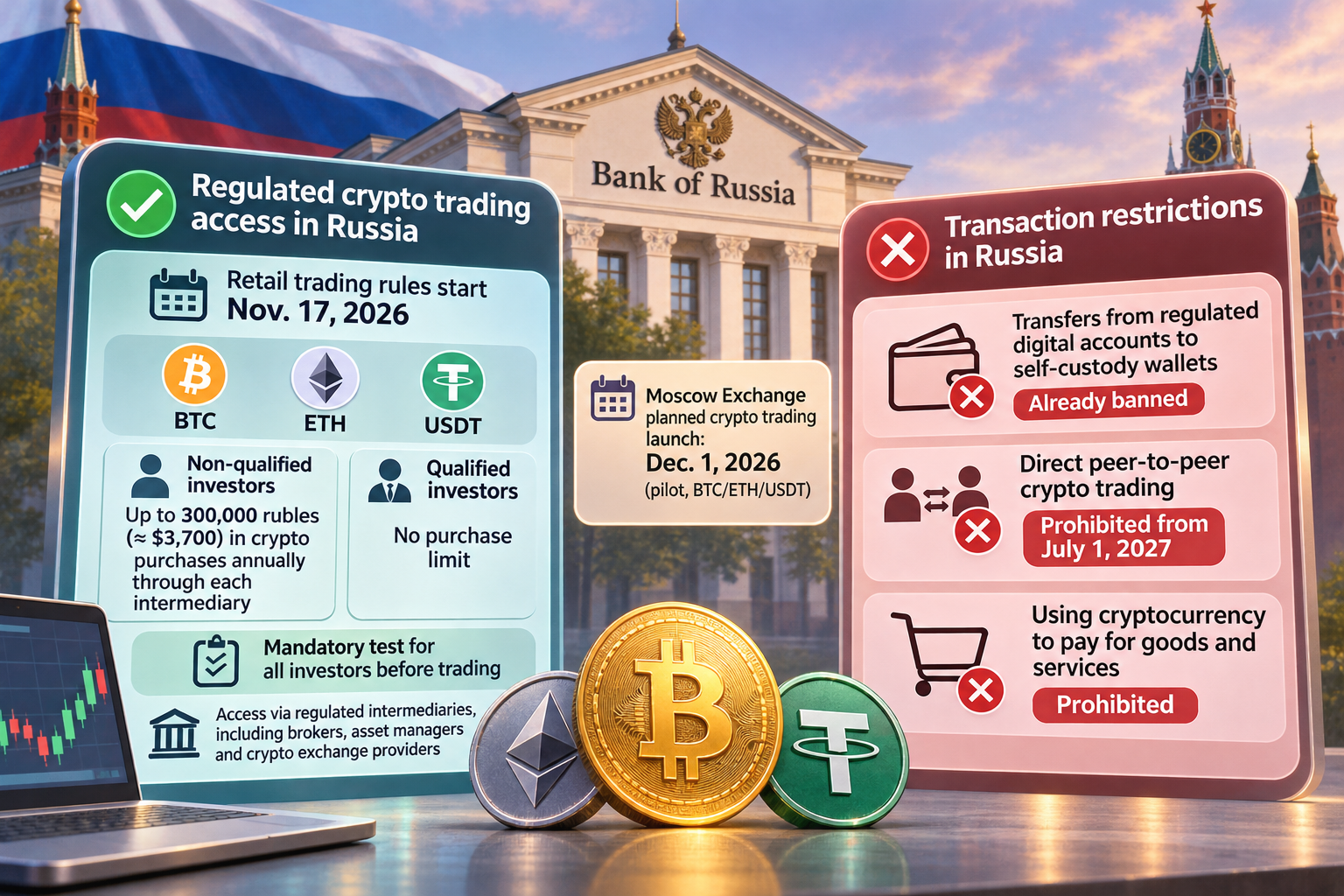
Access through regulated platforms does not extend to every type of crypto transaction. Direct peer-to-peer trading is set to be prohibited from July 1, 2027. According to the Bank of Russia, transfers from regulated digital accounts to self-custody wallets are already banned. Russia also maintains a prohibition on paying for goods and services with cryptocurrency.
Source: cointelegraph.com (originally published 2026-11-07 02:47 UTC+8)