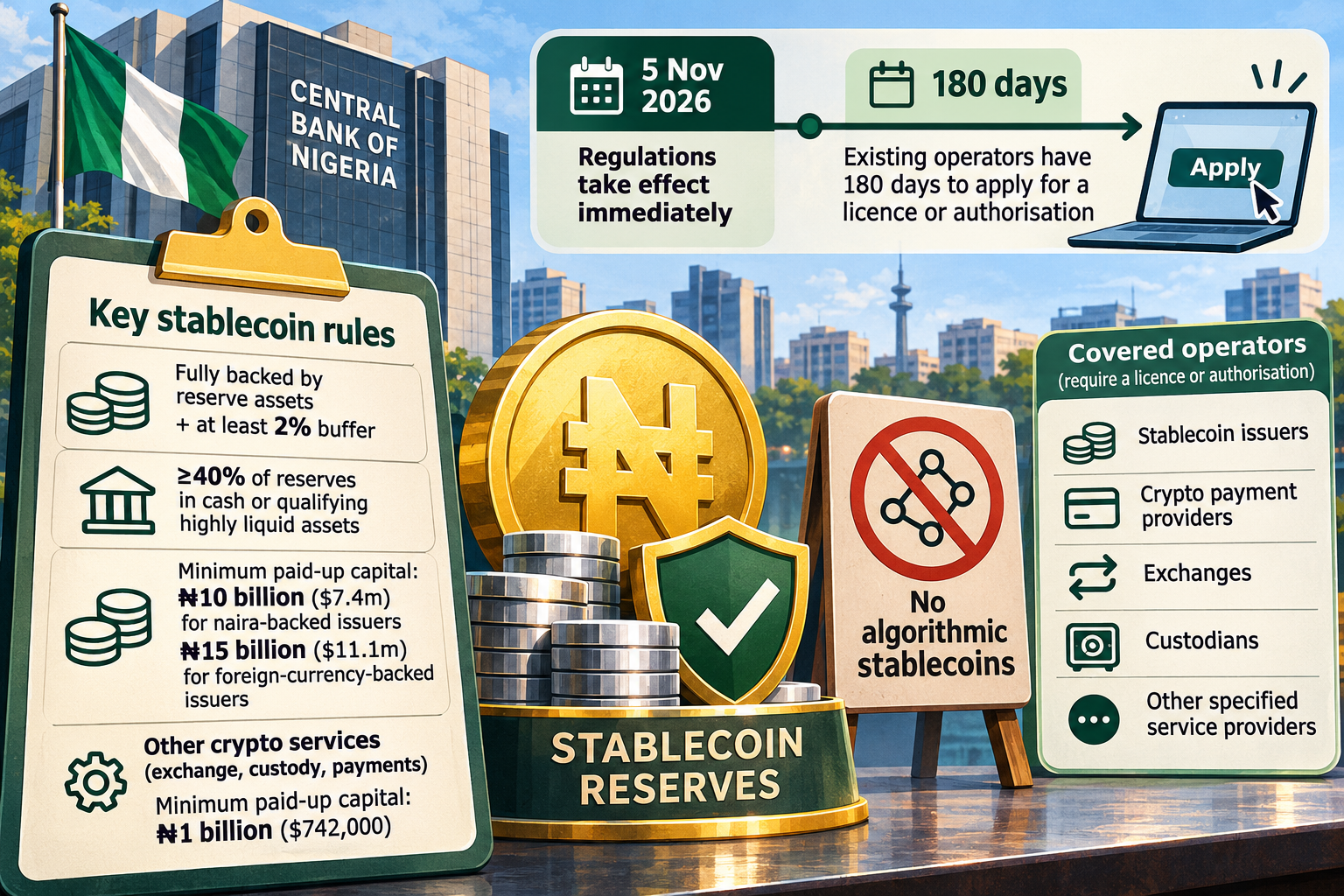
Nigeria’s central bank issued rules for non-security virtual assets on 5 November 2026, according to a report published the following day. The regulations took effect immediately, but existing operators have 180 days to apply for a licence or authorisation. They cover stablecoin issuers, crypto payment providers, exchanges, custodians and other specified service providers.
Stablecoin reserves and capital
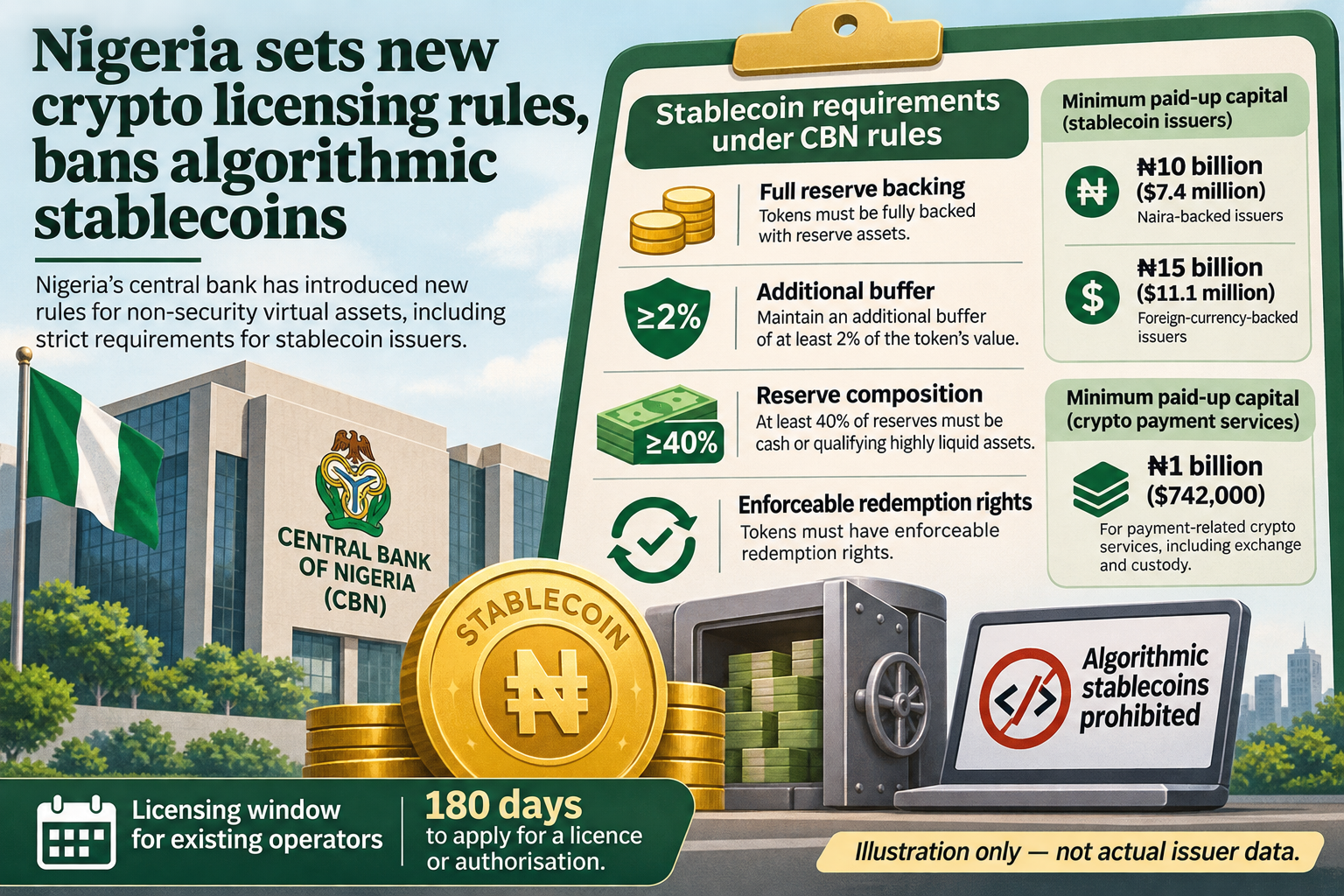
Under the Central Bank of Nigeria (CBN) rules, stablecoin issuers must fully back their tokens with reserve assets and hold an additional buffer of at least 2% of their value. At least 40% of reserves must be cash or qualifying highly liquid assets. Minimum paid-up capital is 10 billion naira ($7.4 million) for naira-backed issuers and 15 billion naira ($11.1 million) for foreign-currency-backed issuers.
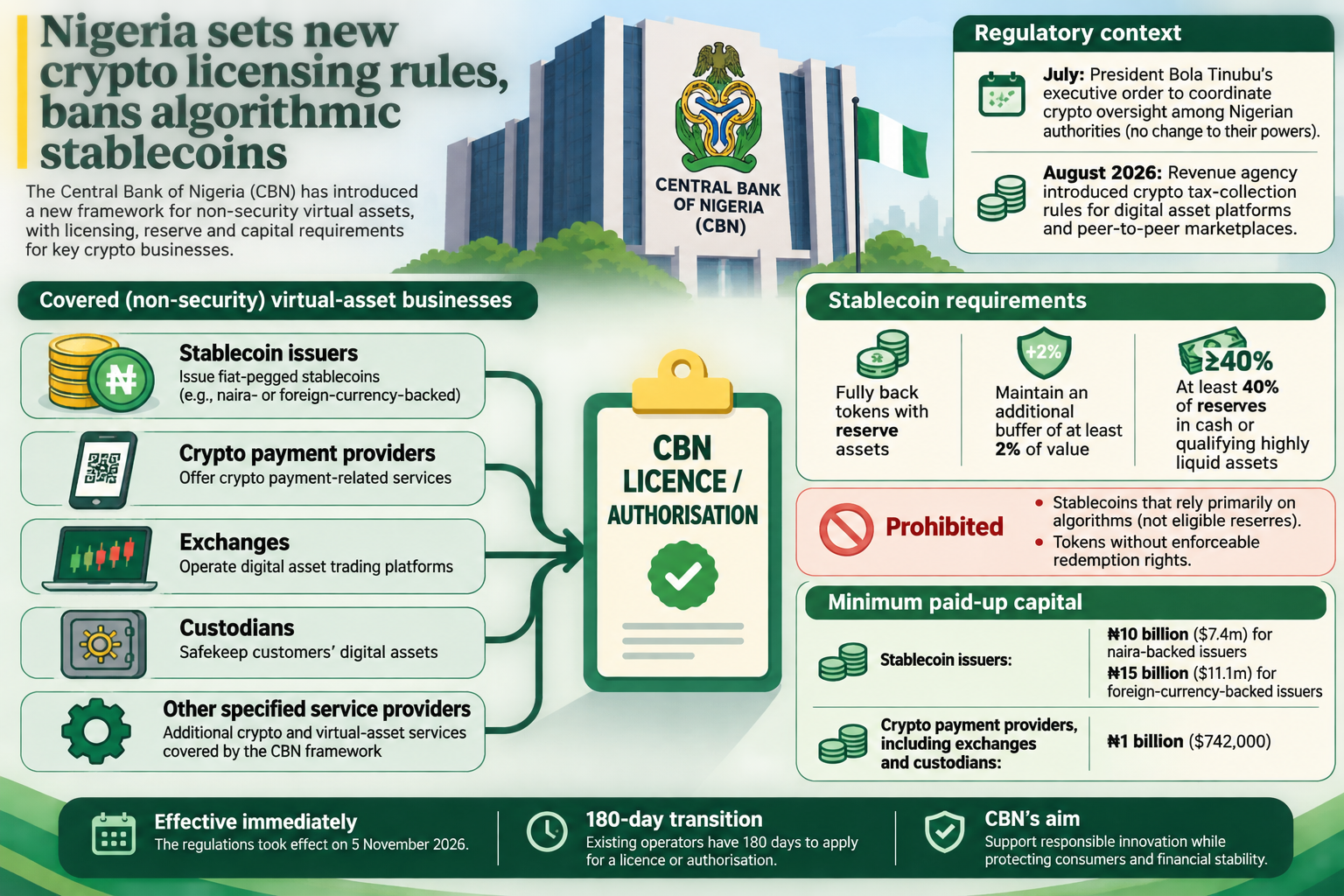
The regulations prohibit stablecoins that rely primarily on algorithms rather than eligible reserves to maintain their value, as well as tokens without enforceable redemption rights. Companies providing payment-related crypto services, including exchange and custody, face a minimum paid-up capital requirement of 1 billion naira ($742,000).
Regulatory context
The CBN said the framework is intended to support responsible innovation while protecting consumers and financial stability. It follows a July executive order by President Bola Tinubu aimed at coordinating crypto oversight among Nigerian authorities without changing their existing powers.
Nigeria had previously limited exchanges’ banking access and sought to restrict peer-to-peer trading in naira. Binance ended its naira services in March 2024 amid government scrutiny and allegations of currency manipulation. Nigerian authorities detained Binance executive Tigran Gambaryan for nearly eight months before dropping money-laundering charges against him in October 2024. The country’s revenue agency introduced crypto tax-collection rules for digital asset platforms and peer-to-peer marketplaces in August 2026.
Source: cointelegraph.com (originally published 2026-11-06 21:57 UTC+8)