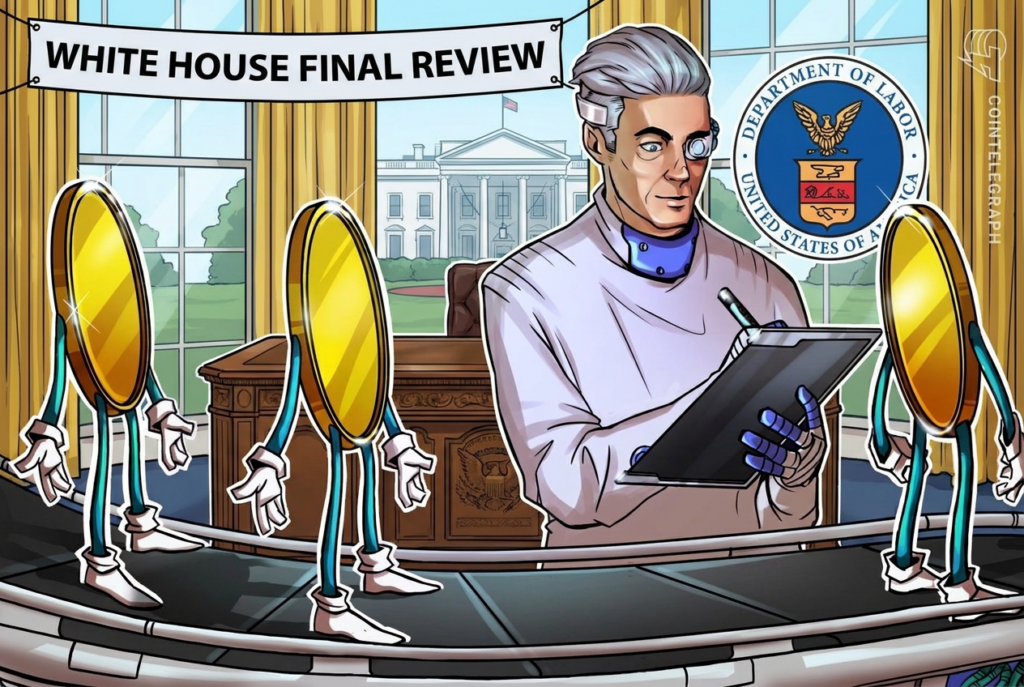
In a report published on November 7, 2026, Cointelegraph said a proposed US Labor Department rule that could make smaller cryptocurrencies available in 401(k) retirement plans had reached the White House for final review on Thursday, according to the Office of Information and Regulatory Affairs. The measure is still a proposal. It is not an effective rule, and it does not require any plan to offer crypto.
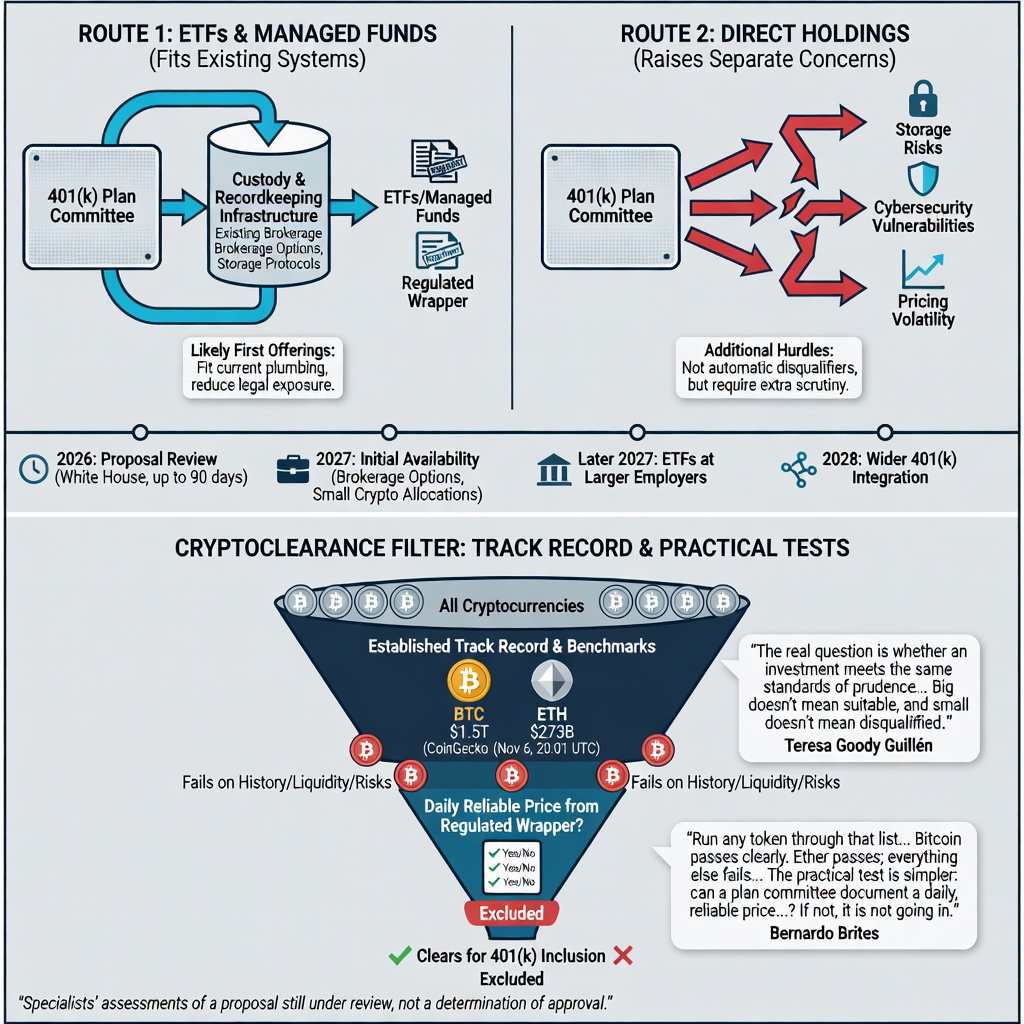
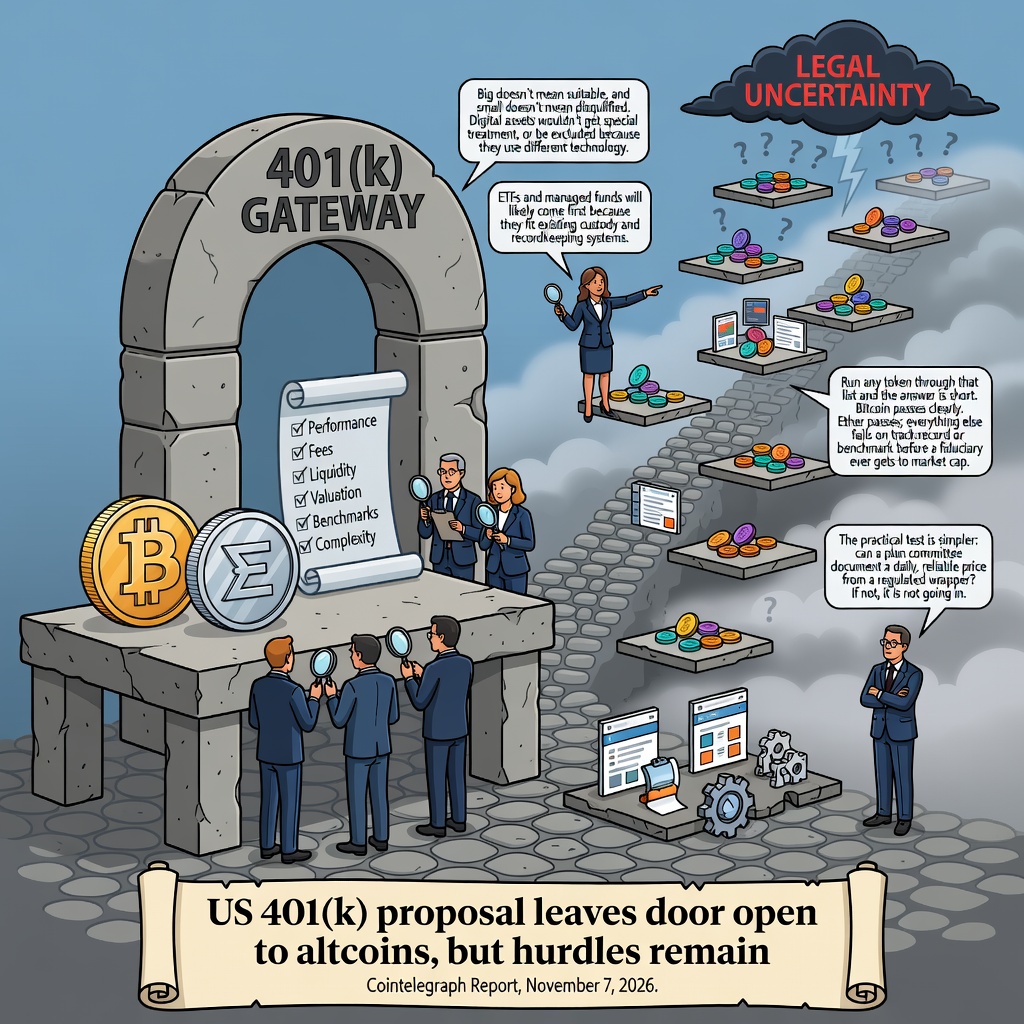
The March proposal is aimed at making it easier for retirement plans to offer alternative investments such as crypto, while giving employers and plan managers more legal protection. It does not name which digital assets could be included and does not set a minimum market-capitalization requirement. It does tell plan managers to consider six factors when choosing investments: performance, fees, liquidity, valuation, benchmarks and complexity. Cointelegraph reported that this could open the door to more cryptocurrencies in retirement plans without guaranteeing that any will be offered, and that experts expect smaller tokens to face more difficulty than Bitcoin and Ether because of limited history, liquidity and other risks.
Teresa Goody Guillén, managing partner at Bellementis PLLC, said Bitcoin and Ether are likely to be offered first because of their established markets and investment products. CoinGecko data cited in the report put their market capitalizations at approximately $1.5 trillion and $273 billion, respectively, as of 20:01 UTC on November 6, making them the two largest cryptocurrencies by that measure. Guillén said that standing does not automatically exclude altcoins. Managers of 401(k) plans would still need to show that their choices are sensible.
“The real question isn’t which cryptocurrencies regulators pick – it’s whether an investment meets the same standards of prudence, liquidity, valuation and investor protection as any other retirement option,” Guillén said. She added that market capitalization matters but should not be decisive. “Big doesn’t mean suitable, and small doesn’t mean disqualified,” she said. “Digital assets shouldn’t get special treatment, or be excluded because they use different technology.”
Bernardo Brites, co-founder and CEO of Trace Finance, agreed with that caution and went further. “Run any token through that list and the answer is short. Bitcoin passes clearly. Ether passes; everything else fails on track record or benchmark before a fiduciary ever gets to market cap,” he said. In this setting, he said, market cap matters only indirectly. “The practical test is simpler: can a plan committee document a daily, reliable price from a regulated wrapper?” he said. “If not, it is not going in.”
The Labor Department proposal does not limit crypto investments to exchange-traded funds or managed funds. Even so, the experts said those products are likely to be offered before direct crypto holdings. “ETFs and managed funds will likely come first because they fit existing custody and recordkeeping systems,” Guillén said. She said holding cryptocurrencies directly would raise further concerns about storage, cybersecurity and pricing, while adding that those risks should not automatically rule direct holdings out.
Brites also expects availability to widen gradually: existing brokerage options first, then standalone ETFs and funds that include small amounts of crypto. He expects some crypto investment options to become available in 2027, ETFs at larger employers later that year, and wider availability in retirement funds by 2028. “The rule changes the legal risk, not the plumbing, and the plumbing is slower,” he said. “White House review can take up to ninety days, then publication, then an effective date typically sixty days later.”
He said legal uncertainty could slow adoption as well. The proposal would give retirement plan managers some protection from lawsuits, but it would not stop them from being sued over investment decisions. A later administration could also reverse the rule, which he said could make employers hesitant to add crypto to long-term plans. “The 2022 guidance was reversed in 2025; a fiduciary signing a ten-year plan design has to consider that this rule could be reversed too,” he said. “And with courts giving less deference to agencies, how much weight the safe harbor carries in litigation is itself unsettled.”
Those comments are the specialists’ assessments of a proposal still under review, not a determination that any token has been approved for US retirement plans.
Original report: Cointelegraph, November 7, 2026.