A stablecoin payment does not, by itself, determine which Hong Kong licences a provider needs. In an analysis published on November 16, 2026, Shao Jiadian of Mankun Blockchain Legal Services argued that the answer depends on who handles the fiat transfer, whether merchants can reuse a platform balance, and who trades or controls the digital assets.
Fiat settlement and merchant balances
A merchant may receive Hong Kong dollars in a bank account after a customer pays in stablecoins. The Money Service Operator (MSO) question is whether the payment company handles or arranges fiat-currency exchange or remittances for customers, including cross-border transfers. Having a bank execute the final transfer does not necessarily remove the company from that analysis. Nor does an MSO licence automatically authorise stablecoin trading: converting a stablecoin into Hong Kong dollars is distinct from fiat-to-fiat exchange under the MSO framework.
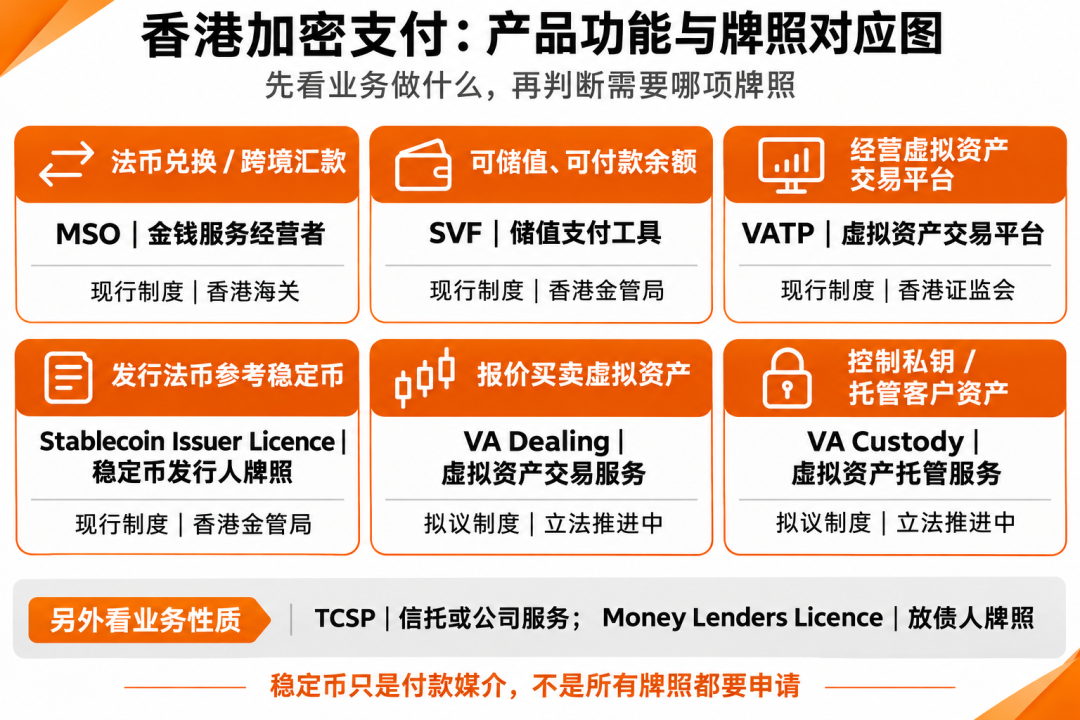
A Stored Value Facility (SVF) assessment turns on what happens after the merchant is paid. A balance that remains on the platform and can be used for further payments to third parties may bring the arrangement within SVF scope. A balance that is promptly settled to the merchant’s external bank account calls for a different assessment; the mere appearance of a balance is not conclusive. The analysis notes that SVF applicants face a minimum paid-up capital requirement of HK$25 million, alongside other regulatory requirements.
Trading, issuance, custody and credit
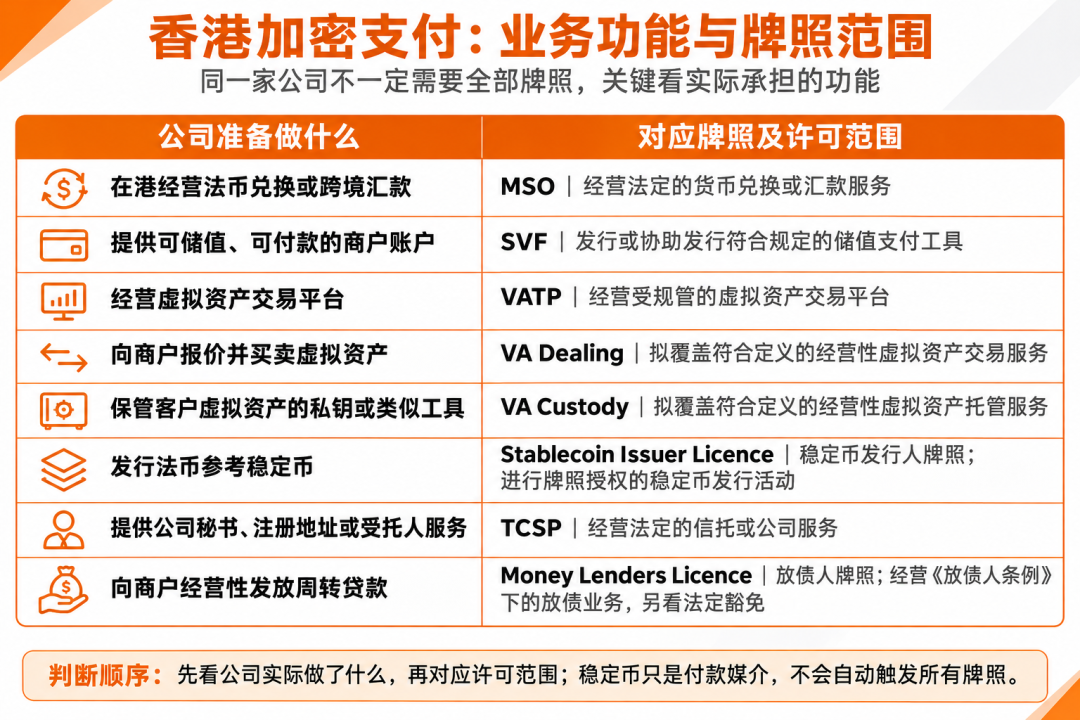
The presence of stablecoins does not automatically make a payment provider a virtual asset trading platform (VATP). The analysis distinguishes ordinary payment processing from operating a marketplace that matches customers’ virtual-asset trades. It also distinguishes using an existing stablecoin from issuing one. Hong Kong’s Legislative Council passed the Stablecoins Ordinance in May 2025, establishing a separate licensing framework for fiat-referenced stablecoin issuers; the article does not give an effective date.
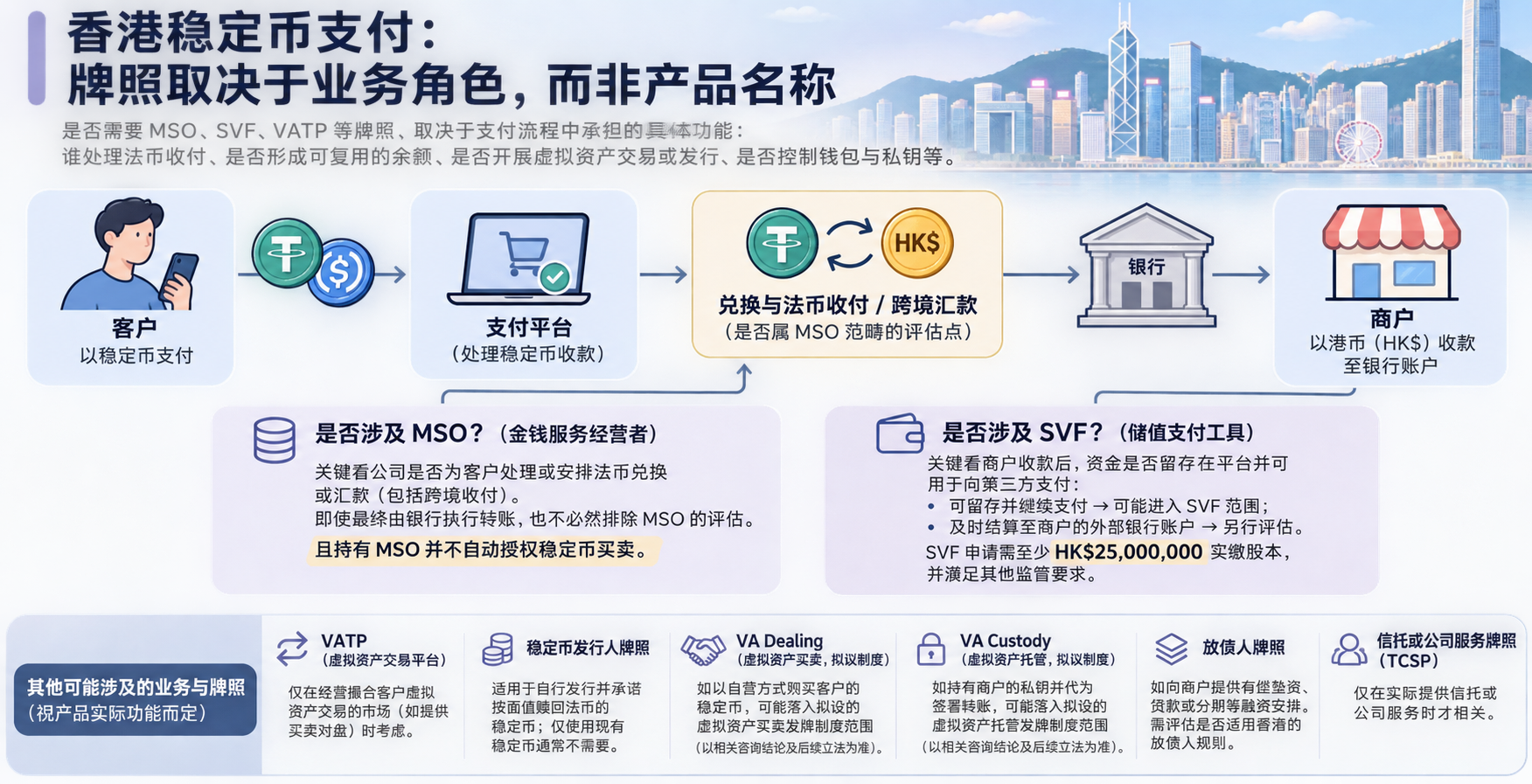
Other functions require separate attention. Shao points to planned licensing regimes for virtual asset dealing and custody, citing the relevant consultation conclusions—not rules that a company can assume are already in force. Buying customers’ stablecoins as principal may raise dealing questions under the planned regime. Holding merchants’ private keys and signing transfers on their behalf may raise custody questions. Merchant advances that amount to paid lending may also require assessment under Hong Kong’s money-lending rules. Trust or company-service licensing is relevant only if those services are actually provided.
The practical starting point is therefore a map of the payment flow: who receives and transfers fiat, whether a reusable balance is created, who buys the stablecoins, and who controls the wallet keys. Each function must then be assessed against its own licensing scope and the status of any proposed regime.