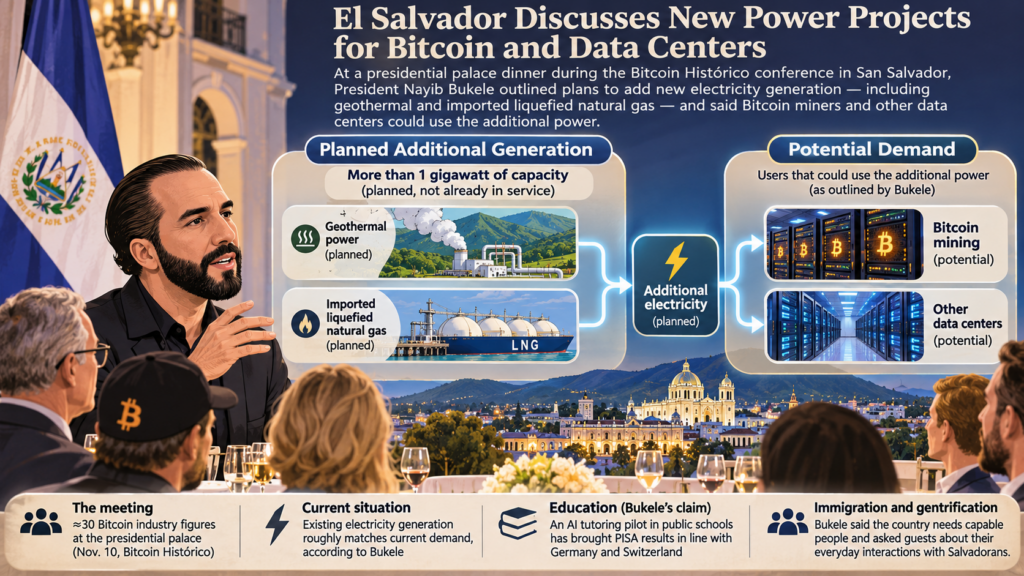
As reported on November 20, 2026, El Salvador’s President Nayib Bukele hosted roughly 30 Bitcoin industry figures at the presidential palace on November 10, during the Bitcoin Histórico conference in San Salvador’s historic center. The roughly three-hour dinner was organized by the presidential Bitcoin Office and hosted by Stacy Herbert and Max Keiser.
Guests included Grupo Salinas founder Ricardo Salinas Pliego, Unchained Capital founder Parker Lewis, Bitcoin Beach’s Mike Peterson, Citizen X’s Katie Ananina, Satlantis founder Aleks Svetski, Bitcoin Core contributor Jon Atack, and representatives of mining companies including Abundant Mines and OCEAN Mining.
Energy was a central topic. Bukele said El Salvador’s existing electricity generation roughly matched current demand and described plans for projects that would add more than one gigawatt of capacity, including geothermal power and imported liquefied natural gas. He said Bitcoin miners and other data centers could use the additional electricity, whether through government operations or companies bringing equipment and investment into the country. The capacity he described was planned, not already in service. Miners at the dinner responded positively, according to the report. Salinas’s Grupo Dragón is involved in geothermal, wind, solar and natural-gas power generation in Mexico.
The discussion also covered immigration and concerns about gentrification. Responding to claims that Western arrivals could generate local resentment and that Bitcoin industry participants were being called “colonizers,” Bukele asked guests about their everyday interactions with Salvadorans and argued that the country needed capable people. He also claimed that an AI tutoring pilot in public schools had brought PISA results in line with Germany and Switzerland, and said private schools were introducing similar programs. Those education outcomes were presented as Bukele’s claims, not independently established findings.