In a commentary published on November 19, 2026, ChainArgos founder Jon Reiter examined a US policy dispute prompted by what he described as a theft of more than $6 billion from Binance. His central question was whether the proposed Clarity Act would have changed how quickly assets were frozen. The account of the theft and the responses below are claims presented in Reiter’s commentary, not independently established findings here.
What the proposed law could have changed
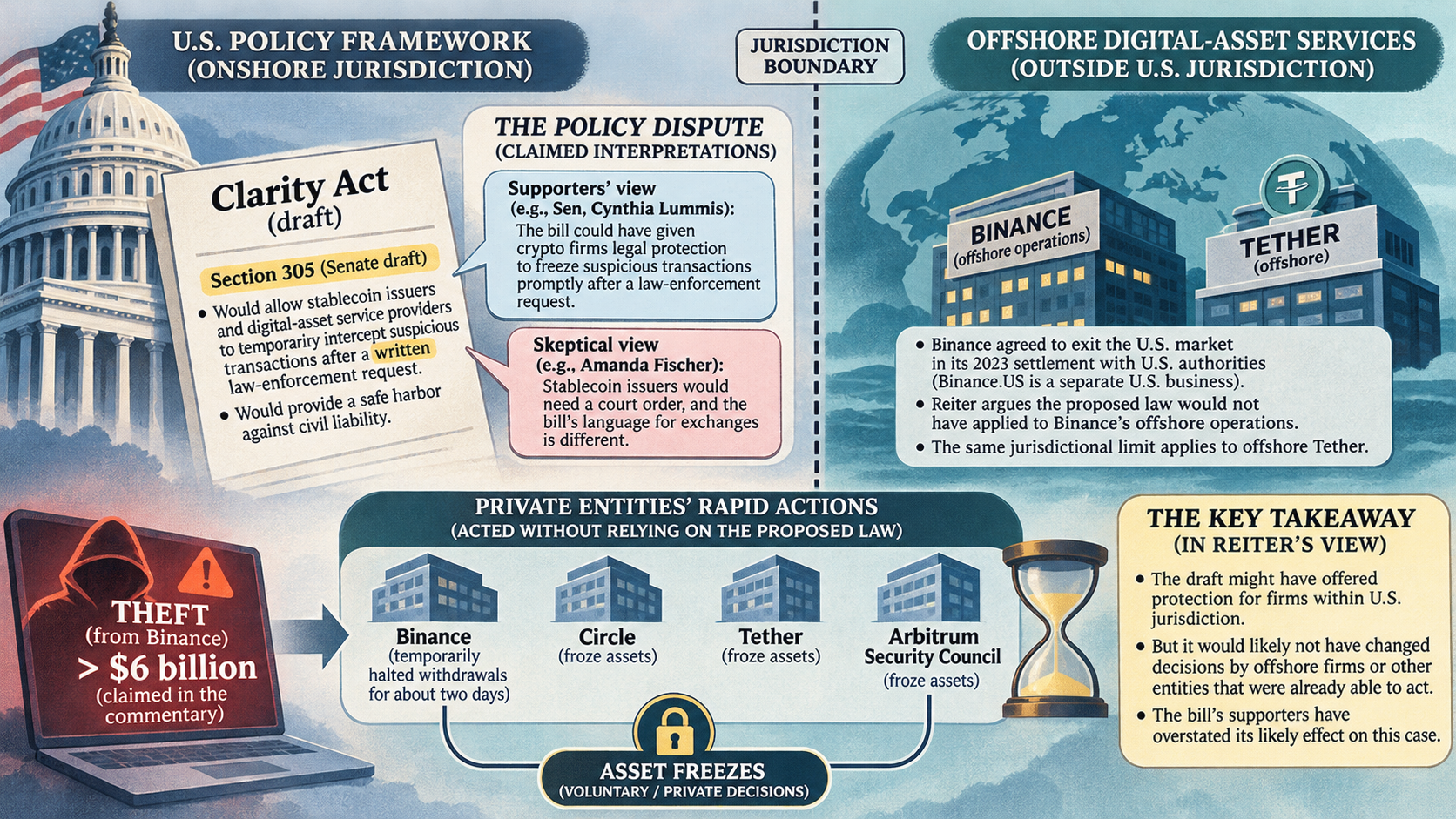
US Senator Cynthia Lummis argued on X that the bill could have given crypto firms legal protection to freeze suspicious transactions promptly after a request from law enforcement. Amanda Fischer, policy director and chief operating officer of Better Markets, disputed that reading. She argued that stablecoin issuers would need a court order and pointed to different language governing exchanges. Lummis responded that Fischer had cited a savings clause rather than the bill’s operative provisions, and said Binance would qualify as a covered digital-asset service provider.
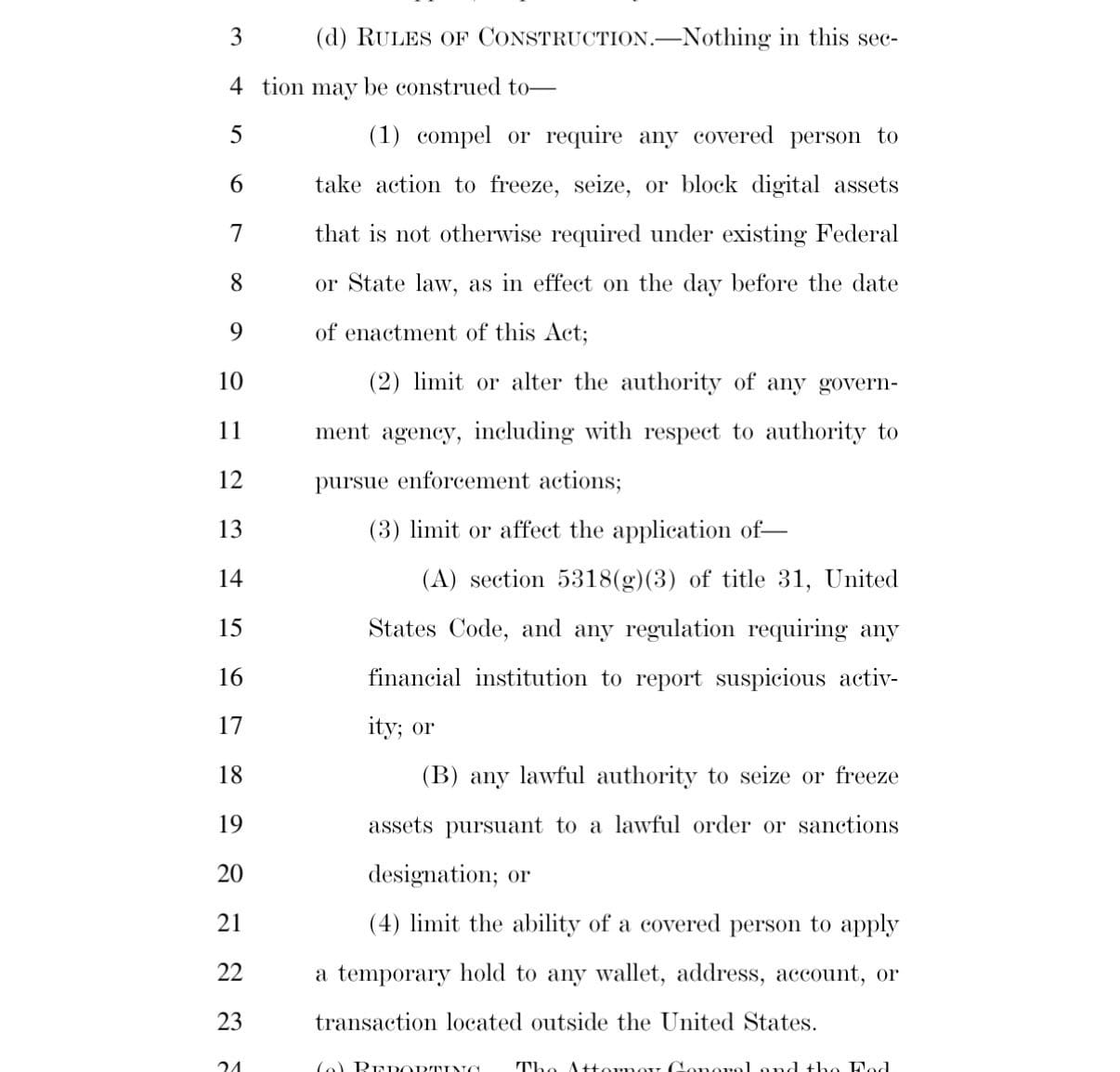
Reiter wrote that Section 305 of a Senate draft would have allowed stablecoin issuers and digital-asset service providers to temporarily intercept suspicious transactions following a written law-enforcement request, with a safe harbor against civil liability. That description does not settle the competing interpretations: the bill had not become law, and the disputed provisions had not received judicial review.
The jurisdiction question
Reiter’s principal objection to Lummis’s argument was jurisdictional. He noted that Binance had agreed to leave the US market as part of its 2023 settlement with US authorities. Binance.US is a separate US business, but Reiter argued that its role would not make the proposed law applicable to Binance’s offshore operations. He said the same jurisdictional problem limits what a US statute could compel offshore Tether to do.
According to the commentary, Binance temporarily halted withdrawals for about two days, while Circle, Tether and the Arbitrum Security Council acted to freeze assets without relying on the proposed Clarity Act. Reiter argued that their actions showed how much an immediate response could depend on decisions by private entities rather than a new US legal safe harbor. He also suggested that US authorities may prefer voluntary cooperation from Tether to a potentially unsuccessful attempt to compel it; that is his inference, not a documented government position.
The debate therefore turns on two separate issues: what protection the draft might have offered firms within US jurisdiction, and whether that protection would have affected decisions by offshore firms or other entities already able to act. Reiter’s conclusion was that the bill’s supporters had overstated its likely effect on this case.