
Bitcoin slipped below $60,000 for the second time in a week after giving up a 5% rebound within six hours. By November 25, 2026, it was down 8.5% over the preceding week and 26.1% over the preceding month, according to CoinMarketCap. A September rally above $80,000 had raised hopes that Bitcoin had reached the low point of its market cycle.
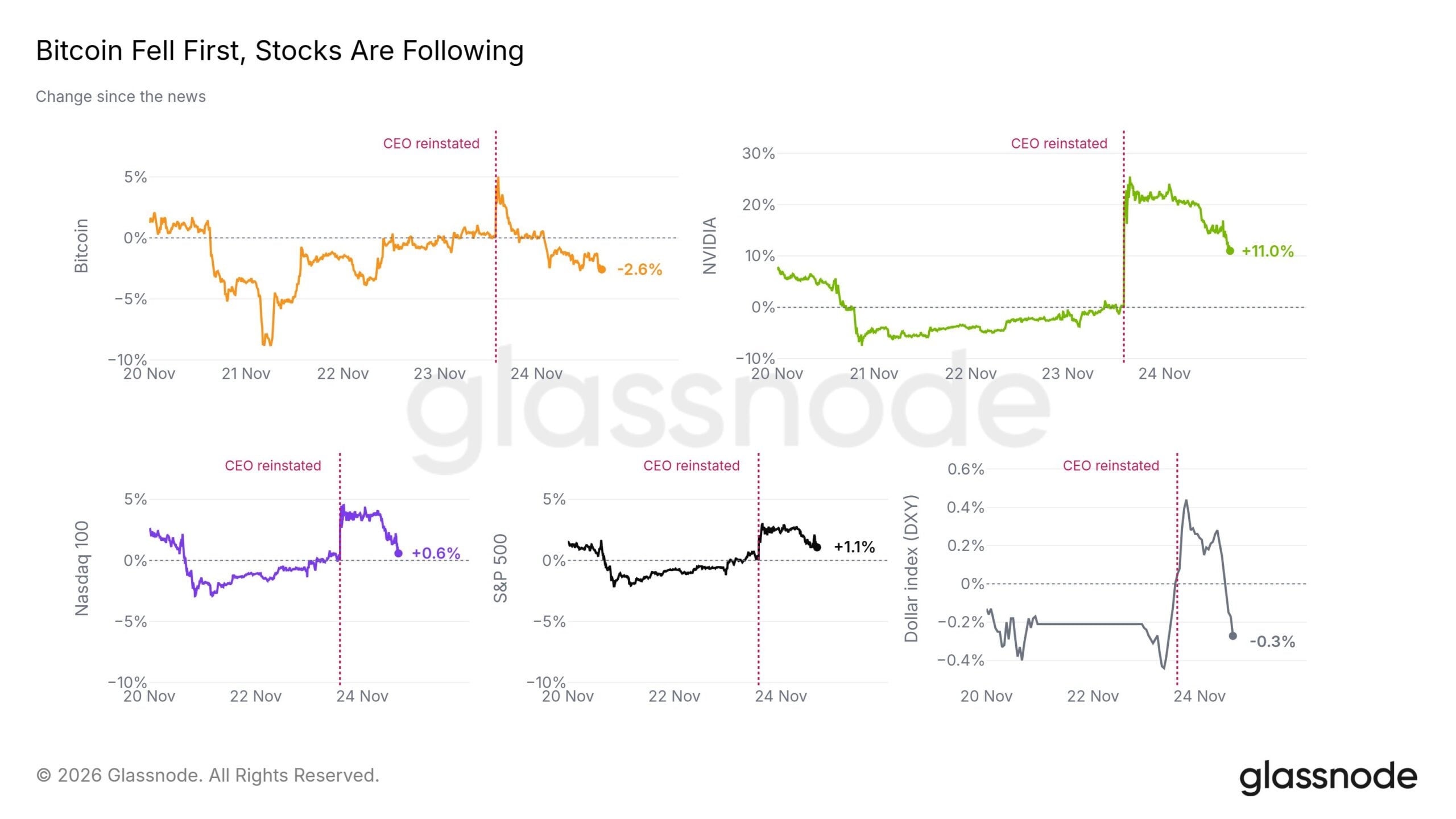
On Monday, November 23, Bitcoin climbed to $64,603 alongside a rally in stocks that Glassnode attributed to reports of Nvidia reinstating Jensen Huang as chief executive. Bitcoin erased its gain within six hours and subsequently fell below $61,000. The Nasdaq later gave up its gains as well. Glassnode interpreted Bitcoin’s early reversal as a sign that investors were using the rebound to sell.
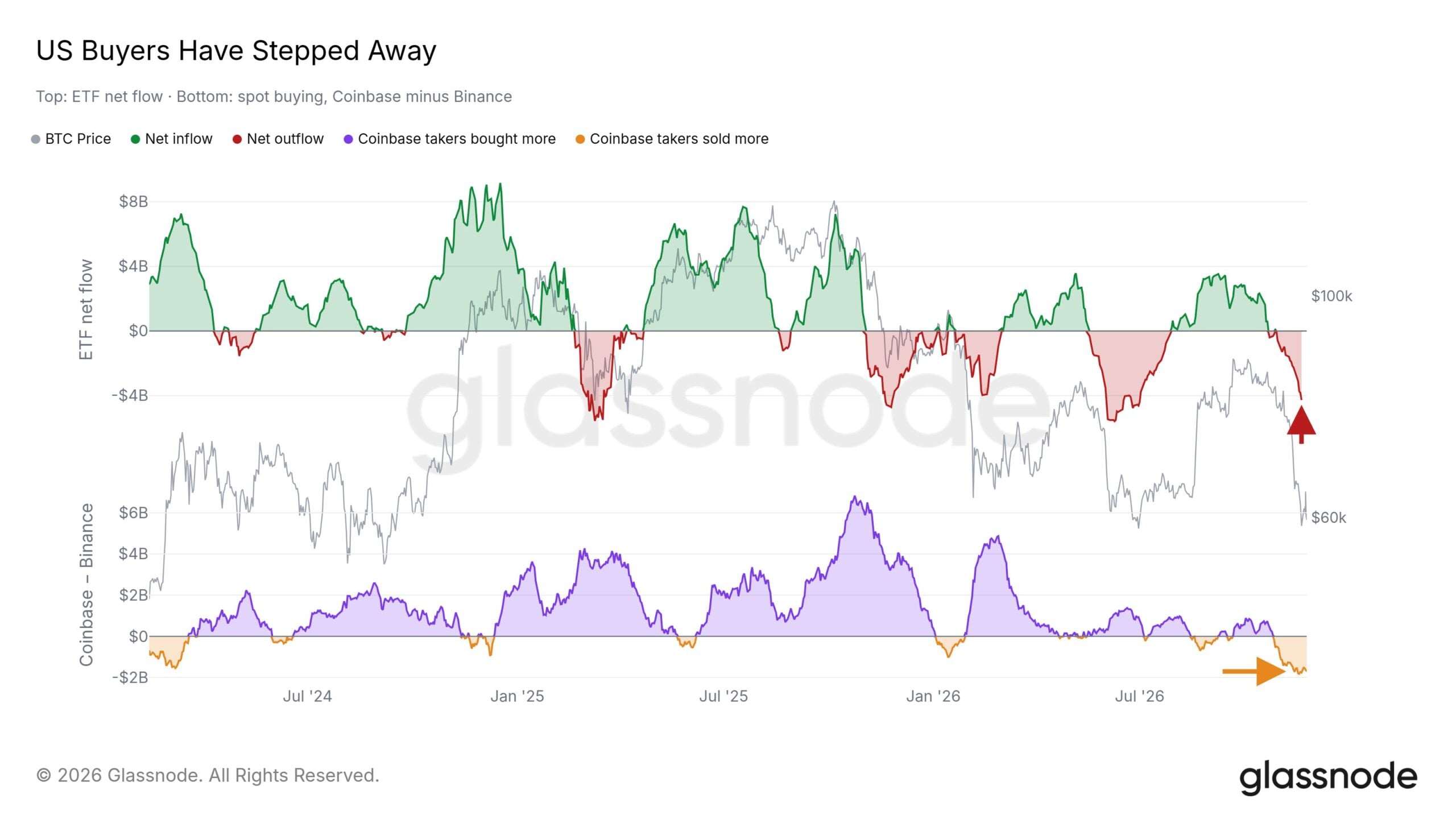
US spot Bitcoin exchange-traded funds recorded $4.3 billion in outflows over the preceding 20 trading days. Glassnode also reported heavy selling pressure on Coinbase, another indication of weak US demand.
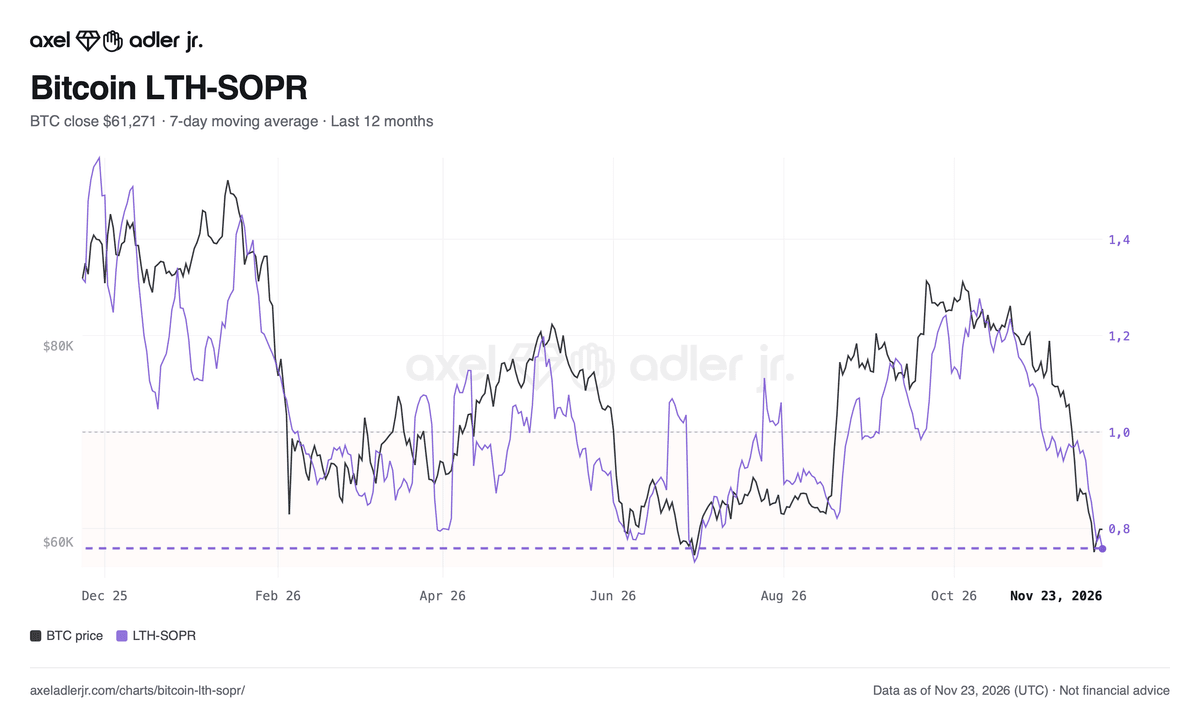
Long-term holders moved coins at deeper losses
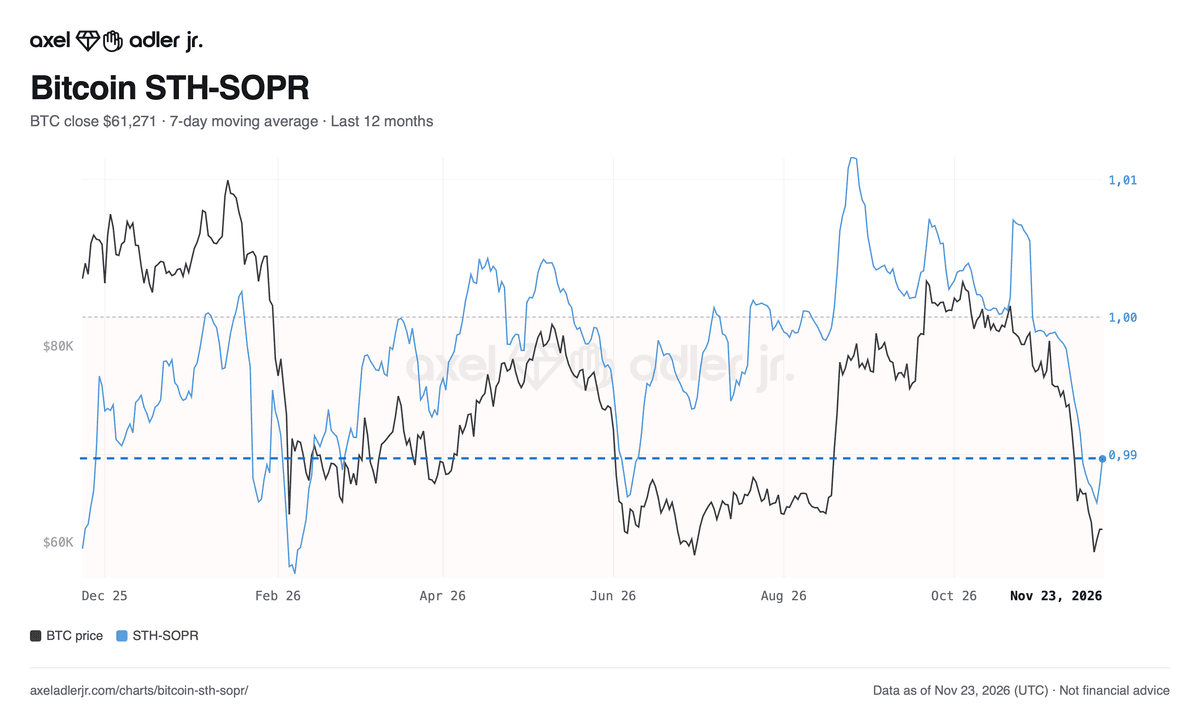
Data from analyst Axel Adler Jr. showed a spent output profit ratio of 0.99 for short-term Bitcoin holders. A reading below 1 means the coins that changed hands moved at a loss on average; it does not measure losses on coins that holders kept.
For long-term holders, the ratio fell by 0.20 over the preceding week to 0.76, its lowest reading in 90 days. It had remained below break-even for 22 consecutive days, and the latest reading indicated deeper average losses on coins moved by long-term holders than on those moved by short-term holders.
Alphractal put Bitcoin’s on-chain realized price at $53,104. A decline toward $53,000 remained a conditional scenario if weak demand and selling pressure persisted, not a market price Bitcoin had reached.